Cooldown
Composting
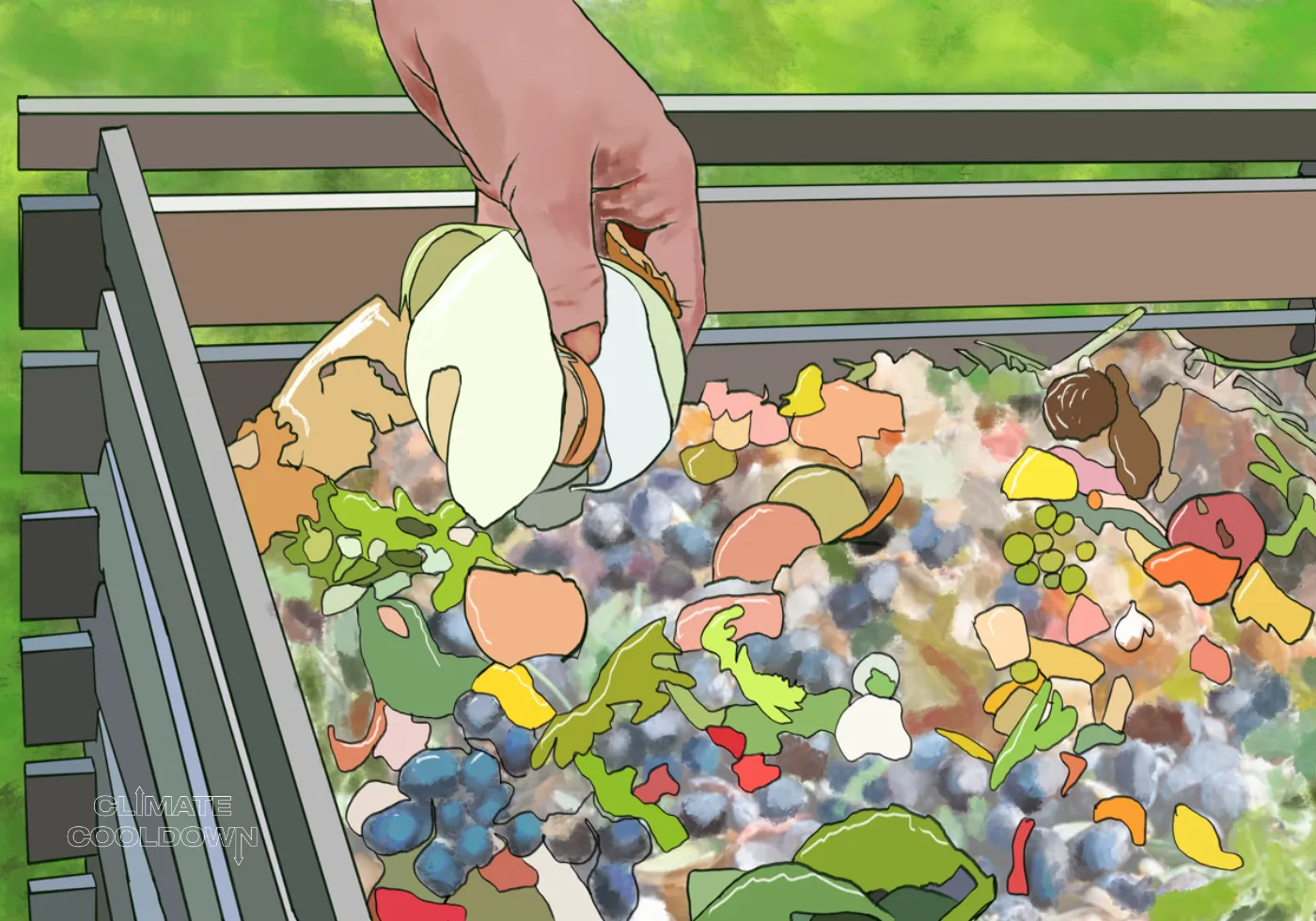
Composting is the act of collecting and storing plant matter whereby it can decay and be added to soil to improve its quality. When organic matter like plants and fungi decompose, their waste all becomes food in the forest. However, when this waste is buried in landfills from cities, organic waste becomes methane, a greenhouse gas. Composting is a solution for this issue of methane being released from the food and plant matter put in landfills.
In the game
In the game Climate Cooldown, "Composting" is a Cooldown card which helps cool down the planet by reducing the impact of food waste by allowing our organic waste to break down naturally and improving the health of the soil.
Prospective degrees
Environmental ScienceSustainable Agriculture
Careers
Organic farmerCommunity supported agriculturalistFarmer's market jobsComposting facility managerOrganic waste management consultant
For the classroom
Discussion prompts by grade level
- What is composting and how does it help the environment?
- Can you think of any household items that can be composted?
- Explain the process of composting and its role in nutrient cycling and soil health.
- Discuss the benefits of composting for reducing waste and greenhouse gas emissions.
- Examine the environmental and economic benefits of composting in waste management and soil fertility.
- Evaluate strategies for promoting community-wide composting programs and overcoming barriers to participation.
- Critically analyze the science behind composting processes and their impact on soil biodiversity and carbon sequestration.
- Discuss innovative composting technologies and their potential for scaling up composting operations on a regional or national level.
Connects to