Disaster
Earthquake
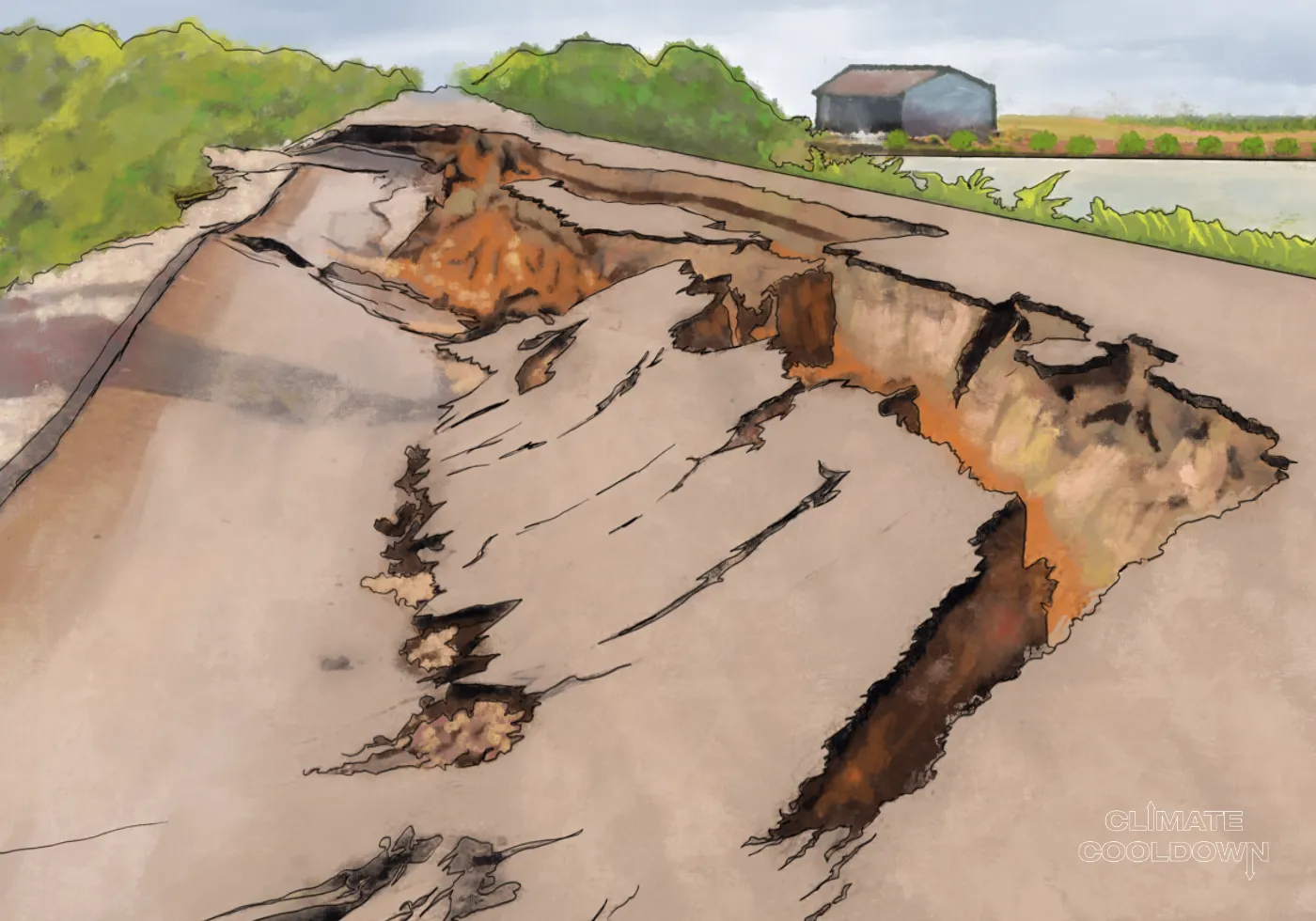
An earthquake is a natural geological phenomenon characterized by the sudden release of energy in the Earth’s crust that creates seismic waves. This release of energy is often caused by the movement of tectonic plates, which are large sections of the Earth’s crust that float on the semi-fluid asthenosphere beneath them.
In the game
In the game Climate Cooldown, "Earthquake" is a Disaster card that reduces the amount of energy, water and food resources a region has from the aftermath of the disaster.
Prospective degrees
GeologyCivil engineering with a focus on structural engineering
Careers
Seismic hazard analystEarthquake-resistant construction engineer
For the classroom
Discussion prompts by grade level
- What is an earthquake and how does it occur?
- Can you think of any safety measures to take during an earthquake?
- Explain the causes and effects of earthquakes, including seismic waves and tectonic plate movements.
- Discuss the impact of earthquakes on infrastructure and communities, and the importance of earthquake-resistant building design.
- Examine the social, economic, and environmental impacts of earthquakes, including secondary hazards such as landslides and tsunamis.
- Evaluate strategies for earthquake preparedness, emergency response, and recovery planning.
- Critically analyze the factors influencing earthquake risk and vulnerability, including population density, urbanization, and geological hazards.
- Discuss the role of interdisciplinary research in earthquake science and engineering, incorporating insights from geology, seismology, and social sciences.
Connects to