Cooldown
Permaculture
Permaculture is a design system and philosophy that aims to create sustainable and regenerative human habitats while harmonizing with the natural environment. The term “permaculture” combines the words “permanent” and “agriculture” or “culture” to signify its focus on long-term sustainability and ecological principles.
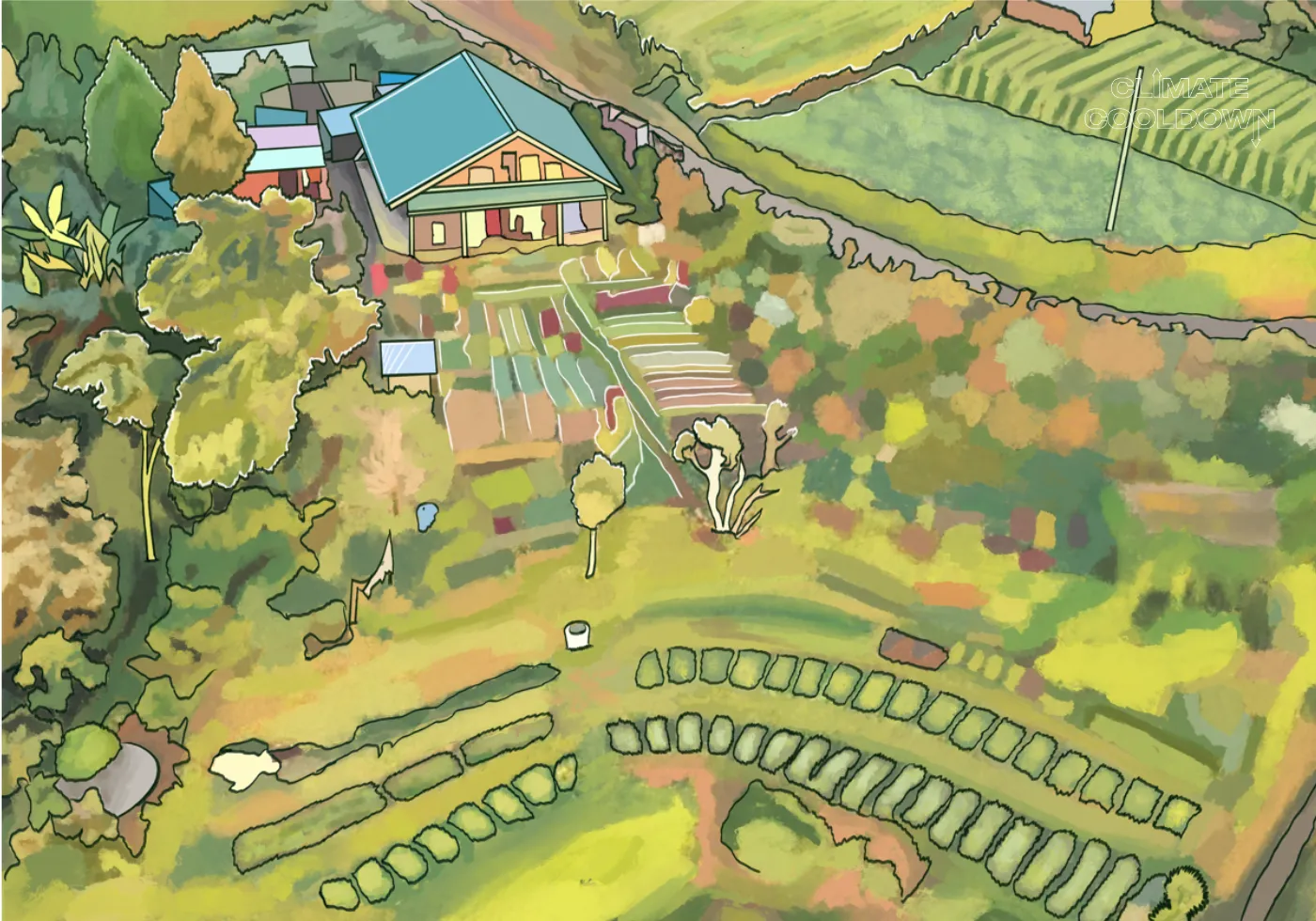
In the game
In the game Climate Cooldown, Permaculture is a method of agriculture in which we co-exist with our habitat allowing the land to be restored to better health.
Prospective degrees
Sustainable AgricultureEnvironmental Studies with a focus on agroecologyPermaculture
Careers
Permaculture designerSustainable agriculture educatorPermaculturist
For the classroom
Discussion prompts by grade level
- What is permaculture and why is it important?
- Can you think of any ways permaculture practices benefit the environment?
- Explain the principles of permaculture design, including diversity, resilience, and sustainability.
- Discuss the applications of permaculture in agriculture, land use planning, and community development.
- Examine the ecological and social benefits of permaculture systems, such as soil health, biodiversity conservation, and food security.
- Evaluate the challenges and opportunities of scaling up permaculture practices in diverse agricultural landscapes.
- Critically analyze the theoretical foundations and practical applications of permaculture ethics and principles.
- Discuss the role of permaculture in addressing complex socio-environmental challenges, such as climate change adaptation and sustainable development.
Connects to