Disaster
Volcanic Eruption
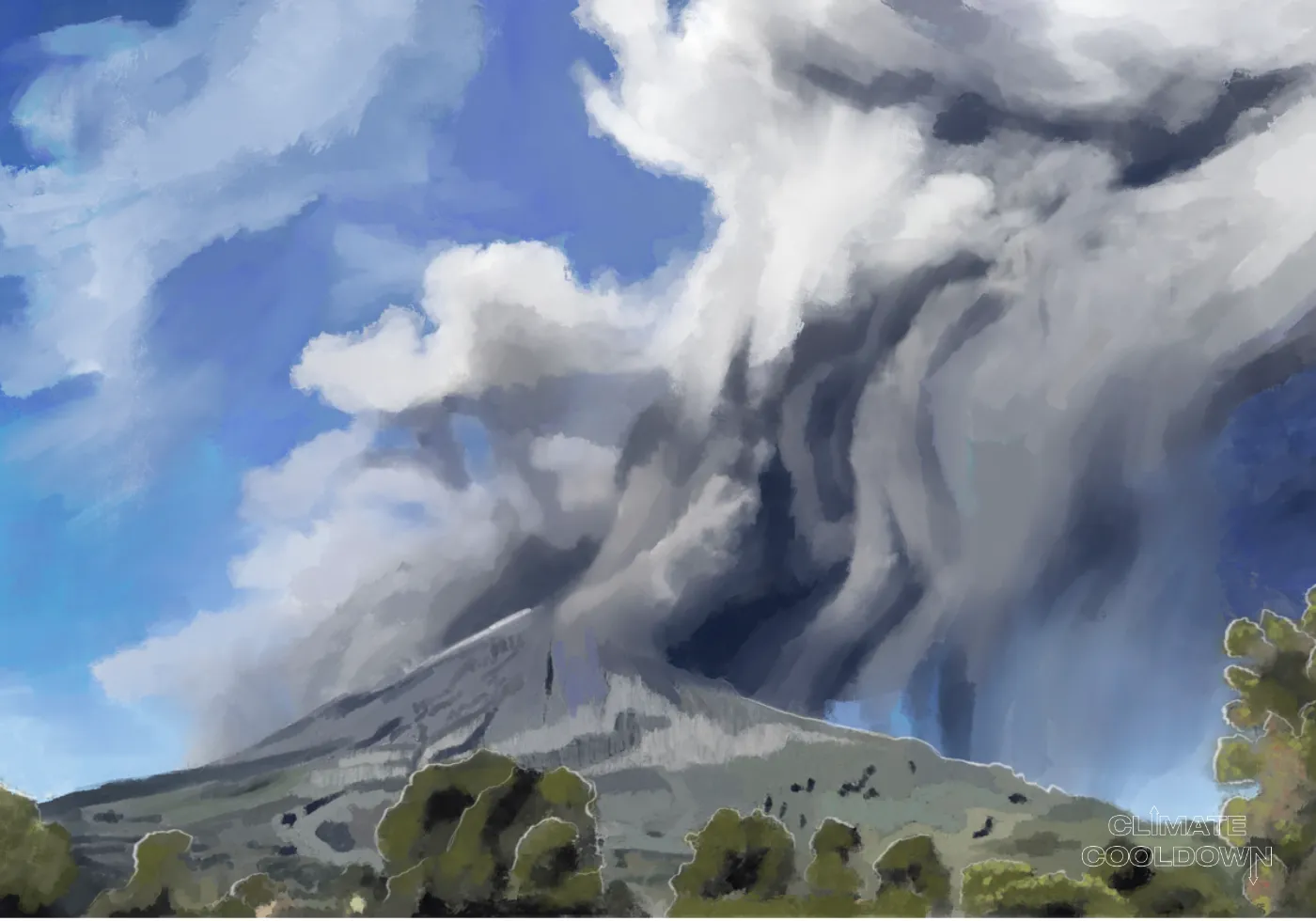
A volcanic eruption is a natural phenomenon where molten rock, ash, and gasses are expelled from a volcano’s vent onto the Earth’s surface or into the atmosphere. During a volcanic eruption, various greenhouse gasses are released into the atmosphere.
In the game
In the game Climate Cooldown, "Volcanic Eruption" is a Disaster card which increases the temperature of the globe due to the release of various greenhouse gasses.
Prospective degrees
GeologyEarth sciences with a focus on volcanology
Careers
VolcanologistVolcanic risk assessment specialistVolcanic monitoring technician
For the classroom
Discussion prompts by grade level
- What is a volcanic eruption and how does it occur?
- Can you think of any impacts of volcanic eruptions on the environment and communities?
- Describe the processes leading to volcanic eruptions, including magma ascent, volcanic gasses, and eruption styles.
- Discuss the hazards associated with volcanic eruptions, such as lava flows, pyroclastic flows, ashfall, and volcanic gasses.
- Examine the factors influencing volcanic activity and eruption frequency, including tectonic plate movements, magma composition, and geological conditions.
- Evaluate strategies for volcanic hazard assessment, monitoring, and mitigation, including volcano monitoring networks, risk mapping, and disaster preparedness plans.
- Choose one extreme historic volcanic eruption that had a temporary cooling effect on the planetary climate and explain why this phenomenon occurred.
- Critically analyze the societal and environmental impacts of volcanic eruptions, including long-term consequences on ecosystems, agriculture, and infrastructure.
- Discuss interdisciplinary approaches to volcanic risk management, integrating insights from geology, seismology, remote sensing, social sciences, and policy analysis.
Connects to